In the narrow lanes of Jagadgirigutta’s Mahalakshmi Nagar, a quiet but life-altering decision was unfolding within a humble slum dwelling.
A 16-year-old girl, let’s call her Usha to protect her identity, was still mourning the loss of her father. He had been a daily wage laborer—the family’s primary provider—who passed away just a year prior. Her mother, working tirelessly as a housekeeper, was struggling under the immense weight of mounting financial pressures and suffocating social expectations. Amidst this desperation, distant relatives began proposing a solution framed as “protection.” They insisted that marrying Usha to a much older man would secure her future and ease the family’s economic burden. What was presented as safety was, in truth, the end of her childhood and her potential.
Yet, this story did not unfold in silence.
Usha had a friend, a peer who was part of the Kishori Vikas program run by Seva Bharathi. Armed with knowledge about child rights and the inherent dangers of early marriage, this friend recognized the warning signs immediately. Despite the social pressure to keep quiet, she chose bravery and spoke out. She alerted the volunteer at her Kishori Vikas centre, who grasped the urgency of the situation. Seva Bharathi moved into immediate action, notifying the Police and other child welfare authorities. A formal case was promptly filed to stop the illegal marriage.
The intervention was met with a wall of resistance. Relatives and local enforcers, unwilling to let go of harmful traditions, attempted to intimidate and pressure the volunteers. They demanded that the team stay out of “family matters.”
However, courage proved stronger than fear. The entire Seva Bharathi team stood resolute and unwavering, refusing to retreat from their commitment to Usha’s safety and her right to an education.
From Conflict to Counseling
Halting the marriage ceremony was only the first part of the challenge. The deeper struggle involved addressing the root causes: entrenched economic hardship and deep-seated societal norms.
Through patient and empathetic counseling, the Seva Bharathi team engaged with Usha’s mother over several days. They helped her understand that early marriage was a temporary relief that created a permanent problem. By emphasizing that education leads to genuine empowerment and long-term security, they slowly began to shift her perspective from desperation to determination.
The tension in their small home began to lift as the focus shifted from a dowry to a syllabus. Fear gave way to hope.
A Future Restored
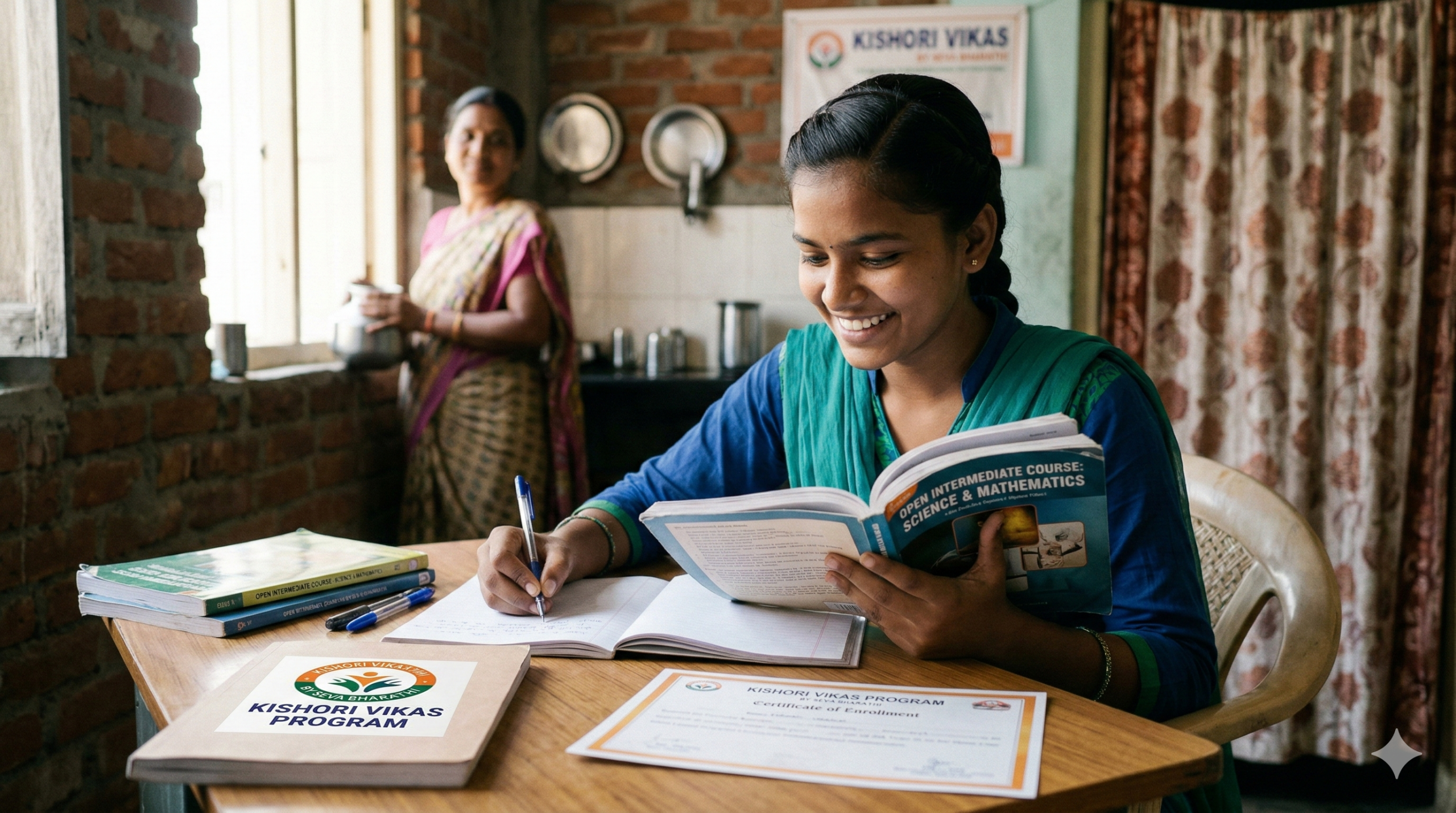
Today, instead of being entered into a forced marriage, Usha is enrolled in an open intermediate course to continue her education. Her wedding preparations have been replaced by books, and her dreams have been allowed to flourish once more. Usha’s story isn’t just a legal victory; it’s a powerful testament to the impact of a single informed voice. It serves as a reminder that grassroots awareness can challenge harmful traditions, timely intervention can change the course of a life, and when one informed person refuses to stay silent, an entire future can be reclaimed.
About Kishori Vikas by Seva Bharathi
For 20 years, the Kishori Vikas Program by Seva Bharathi has been this quiet force for change—dedicating itself to the empowerment of girls in slums and underprivileged areas, one reclaimed future at a time. Through education on health, rights, and vocational skills, we aim to prevent exploitation and build independent futures.
Join us in our mission. Share this story to raise awareness, or support our efforts to keep girls in school and safe from early marriage.